New findings about the brain, worked through rather than repeated
matsycliptickr follows recent discoveries in neuroscience — how the brain may clear waste in sleep, whether adults grow new neurons, how implants turn cortical activity into speech, what complete wiring maps reveal, and what the gut has to do with any of it. Each guide sets out what was found, how it was measured, and where the evidence is still thin.
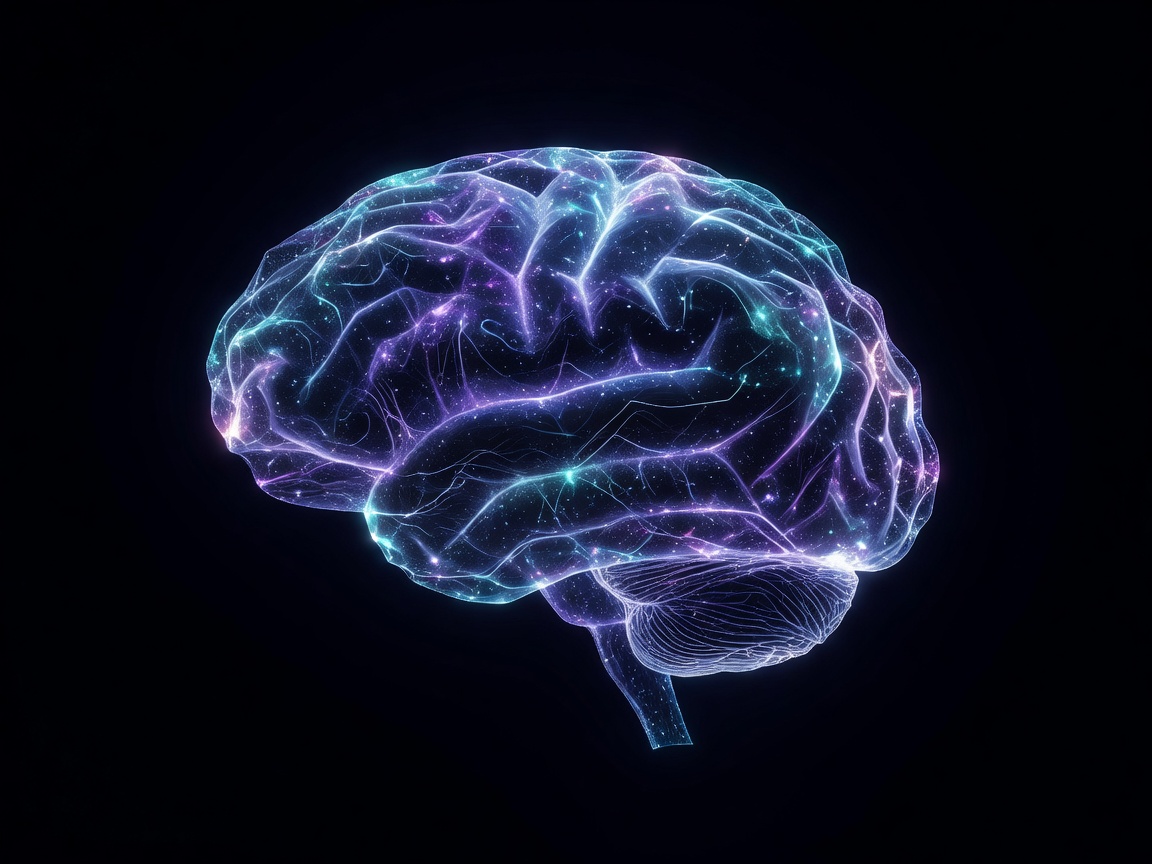
Five threads in current brain research
Each guide takes one line of discovery, names the laboratories and papers that produced it, and reasons through what a careful reader should and should not conclude.
-
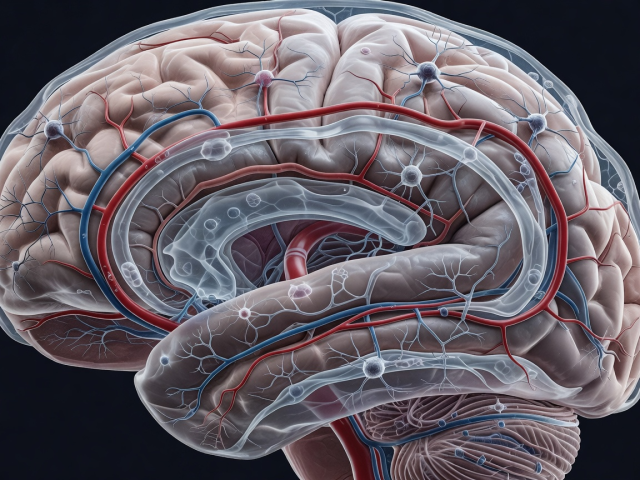 01 — Waste clearance
The glymphatic system
How Iliff and Nedergaard's 2012 mouse imaging at the University of Rochester described a fluid pathway around blood vessels, how the 2013 sleep result and Fultz's 2019 human fMRI work built on it, and why a 2024 Imperial College London study reporting slower clearance during sleep leaves the headline claim contested.
Read the guide -
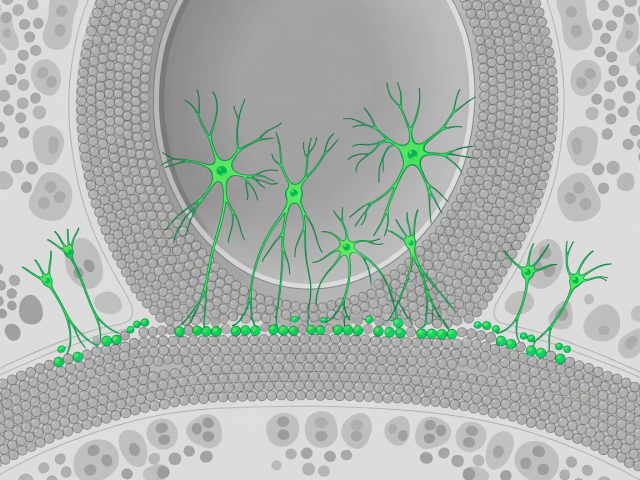 02 — New neurons
Adult neurogenesis
From the 1998 Eriksson paper in Nature Medicine and the Karolinska carbon-14 dating study of 2013, through the 2018 clash between Sorrells and Boldrini, to Moreno-Jiménez's work on tissue fixation and the single-nucleus sequencing that followed. Why the argument is mostly about method, and what a low rate of new neurons could mean.
Read the guide -
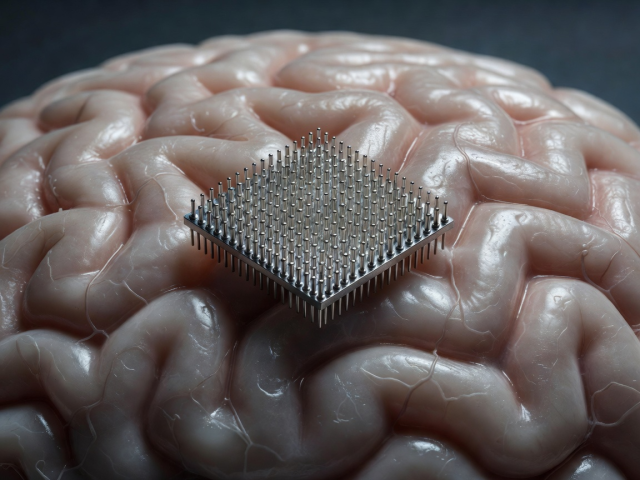 03 — Implants
Brain–computer interfaces
How the BrainGate consortium's Utah arrays, the University of California San Francisco's surface electrode grids and the 2023 Nature speech-decoding papers from Stanford and UCSF work, alongside Synchron's endovascular approach and Neuralink's thread arrays. Signal quality, durability, recalibration and the gap between a trial and a device someone lives with.
Read the guide -
 04 — Wiring maps
Connectomes
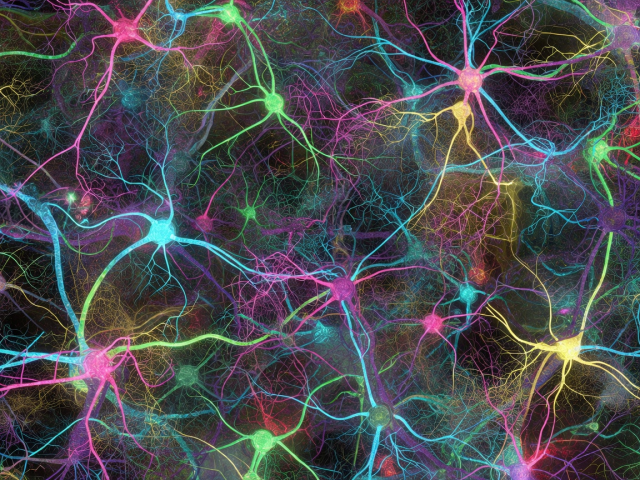
What the 1986 Caenorhabditis elegans map, the FlyWire whole-brain fly connectome published in Nature, the MICrONS cubic millimetre of mouse cortex and the Harvard–Google human cortex sample each contain. What electron microscopy captures, what it structurally cannot, and why a full map does not amount to a working model.
Read the guide -
 05 — Gut signals
The gut–brain axis
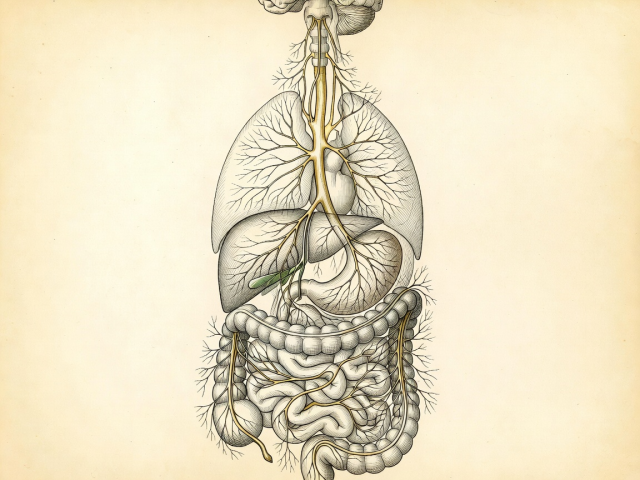
The enteric nervous system, the vagus nerve and the microbiome: what mouse studies from University College Cork and Caltech showed, why the human trial of the same bacterial strain found nothing, and how the Braak hypothesis links Parkinson's disease to the gut. Where correlation ends and mechanism begins.
Read the guide
Four questions each guide keeps asking
A new brain finding tends to travel faster than its caveats. These are the questions that decide how much weight a result can carry, and they recur through every page on this site.
Which species?
Most mechanistic work is in mice. A mouse brain is small enough that diffusion covers distances a human brain would need bulk flow for, and mouse sleep, immunity and gut flora all differ from ours.
What was measured?
Tracer dyes, antibody stains, fMRI signals and RNA counts each stand in for something else. The stand-in can fail independently of the thing it represents, as the neurogenesis fixation story shows.
Has anyone else found it?
A result from one laboratory using one method is a hypothesis with evidence. Independent replication with a different method is what turns it into knowledge, and several findings here are still waiting.
How big is the effect?
A statistically clear result can be functionally small. Whether the human hippocampus adds a few hundred neurons a day matters less than what, if anything, those neurons do.